Published by Jimmy 7 minutes read Housing
Furnishing an Empty Flat Abroad, Fast and Cheaply
In much of the world "unfurnished" means genuinely empty - sometimes without a kitchen. Here is what to buy in the first 48 hours, what can wait, where secondhand actually works, and how to avoid spending a fortune on things you will leave behind.
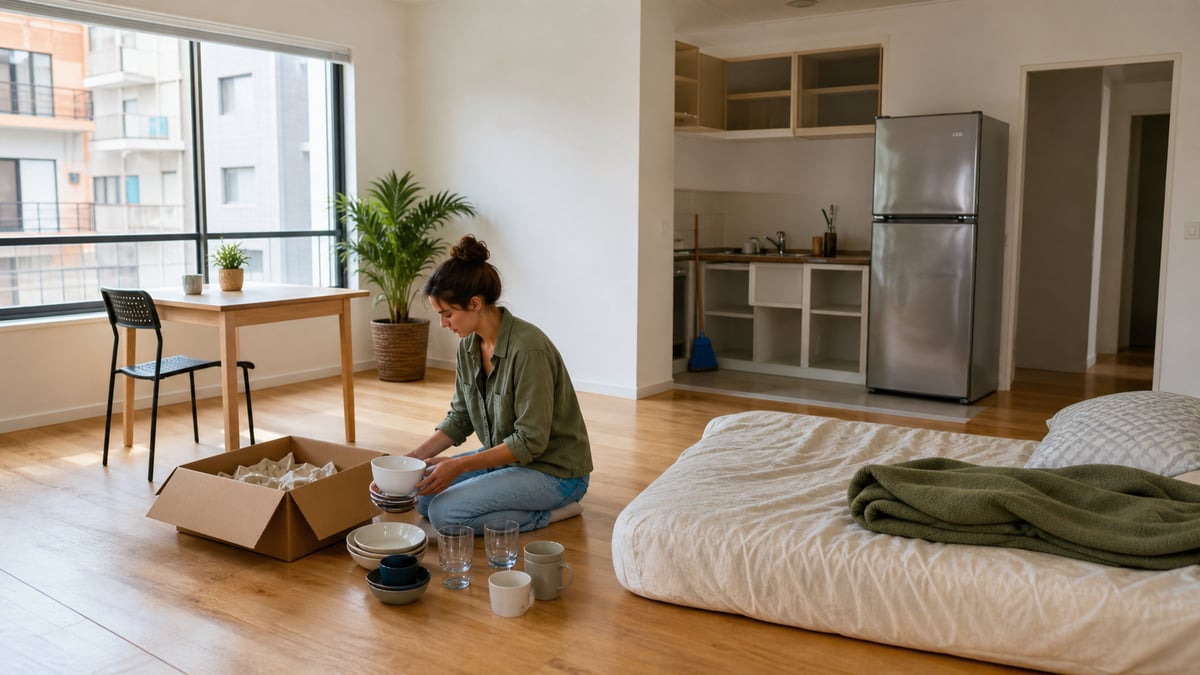
There is a specific feeling that comes with getting the keys to your first flat abroad, opening the door, and discovering that “unfurnished” was not a figure of speech. No bed, obviously. But also no wardrobes, no fridge, no oven, no kitchen units at all, and on one memorable occasion, no light fittings - just wires hanging from the ceiling.
If you are coming from a market where unfurnished still means a functioning kitchen, this is a genuine shock, and it arrives on the day you are most tired and least able to deal with it.
So this post is about the practical business of turning an empty box into somewhere you can live, quickly, without spending money you will regret when you leave.
Find out what “unfurnished” means before you sign
The definition varies enormously by country, and occasionally within one.
At one end, unfurnished means no free-standing furniture but a fitted kitchen with appliances, wardrobes built in, and everything plumbed and wired. At the other, it means bare walls and floors, with the previous tenant having taken their kitchen units with them - which is entirely normal in some markets and baffling everywhere else.
There are usually intermediate categories too, described with local terms that do not translate cleanly. Semi-furnished, part-furnished, and the distinction some countries draw between fixtures and fittings.
Ask specifically, item by item, and ask for photographs of the property empty rather than the marketing shots taken when the last tenant’s furniture was in it. What you are trying to establish: kitchen units, oven and hob, fridge, washing machine, wardrobes or any storage, light fittings, curtains or blinds, and floor coverings.
This matters financially as well as practically, because a flat that needs a kitchen is several thousand more expensive than its rent suggests, and that changes which flats you can actually afford. It belongs in the comparison you make in choosing where to live in a new city and in the arithmetic in budgeting your first six months abroad.
The first 48 hours
Resist the urge to solve the whole flat at once. You are tired, you do not know the city, and things bought in a panic are the things you resent later.
What you genuinely need on night one:
- Somewhere to sleep. A mattress is enough; the bed frame can wait. Many stores deliver a mattress same or next day, which is worth paying for.
- Bedding and towels. Cheap ones for now.
- Basic kitchen for one meal. A pan, a knife, a chopping board, a plate, a bowl, cutlery, a mug, a kettle if that is how you live.
- Cleaning supplies and bin bags. The flat will need cleaning whatever anyone told you.
- Light. If there are no fittings, a couple of cheap standing or clip lamps, tonight.
- Something at the windows. Even temporary paper blinds. Living in a lit goldfish bowl is worse than you think.
- Toilet paper, soap, a shower curtain. The unglamorous list nobody remembers.
That is genuinely enough. Everything else - sofa, table, wardrobes, the second set of anything - can wait weeks without affecting your life.
Then furnish slowly, in the right order
The order I would use: sleep, then wash, then cook, then sit, then store, then decorate.
Buy the things you use every day well, and everything else cheaply. A decent mattress and a decent desk chair, if you work from home, are worth real money because you spend a third of your life on each. A coffee table is a coffee table.
And live in the space for a fortnight before buying anything large. You will discover where the light falls, where the draught comes from, and that the wall you were going to put the sofa against has a radiator on it.
Where to actually get things
Secondhand marketplaces are the best value by a distance, and they are unusually good in expat contexts for a specific reason: people leave. A departing expat selling an entire household in one go, at a price set by the fact that they fly on Thursday, is the single best furniture opportunity in any city. Look for local classified sites, marketplace groups, and expat community groups where “moving sale” posts appear constantly.
The catch is transport. Most secondhand purchases require collection, which means a van. Van hire by the hour, or a local man-with-a-van service, is cheap and usually the missing piece.
Flat-pack chains are the obvious fallback - predictable, deliverable, assembled by you, and available in most large cities. Good for storage, tables and the boring structural pieces. Their delivery slots book out, so order earlier than you think.
Free and giveaway channels are better than they sound. Community groups, building noticeboards, and in some countries a bulky-waste collection day where usable furniture appears on the pavement legally available to take. Check local rules before taking anything from a street.
Chain discount stores for the cheap consumables - bedding, kitchen basics, cleaning things, storage boxes.
Anything shipped should already have been decided, and the calculation is less obvious than people assume: sea freight is priced by volume, so ordinary furniture frequently costs more to move than to replace. That analysis is in shipping your belongings internationally. If a shipment is coming, remember it will arrive weeks after you do, so you still need the 48-hour list.
The appliance question
If the flat needs white goods, this is the biggest single cost and the one worth thinking about.
Check the space and the connections before buying anything. Kitchen appliance dimensions are standardised differently in different countries, and a fridge that does not fit the gap is an expensive lesson. Check the electrical supply and the plug type, and whether a washing machine connection actually exists where you expect it.
Secondhand appliances are a real saving and a real risk. A used washing machine that fails in month four costs you more than a cheap new one with a warranty. My rough rule: buy new for anything with a motor and a water connection, secondhand for anything that is essentially a box.
Also check what happens to appliances when you leave. In markets where tenants own the kitchen, there is an established practice of selling it on to the next tenant, and the reverse is also true - you may be able to buy the outgoing tenant’s kitchen and appliances in place, which is by far the cheapest solution available. Ask.
Spending in proportion to how long you are staying
The useful question before any purchase: will this come with me?
If you are somewhere for a year or two, almost nothing will. Furniture rarely survives an international move economically, so the sensible strategy is cheap, secondhand, and resellable - buy things you can sell on for close to what you paid.
If you are settling, it is worth buying properly over time. Just do it over time rather than in the first month, when you do not yet know the city, the shops, or what your life there actually looks like.
Either way, keep the receipts for anything expensive. And take photographs of the empty flat on the day you get the keys, before anything goes in - meter readings, existing marks, the condition of everything. That is the inventory evidence that decides deposit disputes, and it is the point I make firmly in renting your first apartment abroad.
The other setup that has to happen alongside
Furnishing is only half of making a flat habitable. The other half is connection and paperwork, running in parallel: utility accounts opened in your name with meter readings recorded, home internet ordered - the lead time is often weeks, so it should be the first call you make after getting the keys - and tenant liability insurance where the country requires it. That whole sequence is setting up your phone, internet and utilities.
And register your new address if you have moved from your temporary place, because registration is address-specific and the deadline restarts.
A note on the emotional bit
The empty-flat phase is a low point for a lot of people, and it is worth naming. You have arrived, the excitement of the move has worn off, and you are eating from a saucepan on the floor of a room that echoes. It is a fairly bleak twenty-four hours.
It improves fast, and the thing that improves it most is not more furniture but small acts of making it yours - a rug, a lamp with warm light, something on the wall, a plant. Those are cheap and they do more for how a place feels than the sofa does. Which is somewhere adjacent to the broader point in beating culture shock and building a social life: the settling is made of small things done deliberately, not of waiting to feel settled.
What “unfurnished” means locally, what tenants typically own versus landlords, and where people buy secondhand in a given country are covered in the renting and daily life sections of the country guides - and the housing and rentals forum is where the moving-sale posts and the “does anyone have a van” requests actually live.