Published by Jimmy 5 minutes read Destinations
Moving to Bulgaria: A First-Steps Guide for Expats
The lowest flat tax in the EU, mountains and a Black Sea coast, Sofia's growing tech sector and living costs that are hard to beat inside the union. Bulgaria is a value proposition with real trade-offs - here is the honest version.
Bulgaria makes a straightforward pitch: the lowest headline income tax rate in the European Union, living costs that are among the lowest in the union, a growing technology sector in Sofia and Plovdiv, mountains with genuine skiing an hour from the capital, and a Black Sea coast.
The trade-offs are equally straightforward and worth stating plainly: public services are underfunded, the healthcare system has been weakened by emigration of medical staff, wages are low, and the bureaucracy is heavier going than in the wealthier parts of the EU.
Whether that is a good trade depends almost entirely on whether you earn locally or from abroad.
The right to stay
EU, EEA and Swiss citizens may live and work here, registering their residence with the migration directorate and obtaining a certificate.
Non-EU nationals need a long-stay visa - the D visa - for a defined purpose obtained from a Bulgarian mission before travelling, followed by a residence permit application after arrival. Categories include employment, which generally requires employer sponsorship, business, study, family reunification, and routes for people of Bulgarian descent. There are also investment-linked routes with specific conditions.
Bulgaria has joined the Schengen area, initially for air and sea travel and subsequently for land borders, which changed the practical picture. Euro adoption has been a stated policy goal with a timetable that has shifted more than once - check the current position rather than assuming, since it affects currency exposure planning.
The Bulgaria visa section covers current routes, and the general architecture is in visas and residence permits explained.
The tax proposition
This is why many people look at Bulgaria in the first place, so it deserves a clear treatment.
Personal income tax is a flat rate, the lowest headline rate in the EU. Social security and health contributions are added, and - importantly - contributions are subject to a ceiling, above which no further contributions are due. The combined effect is that the burden on higher incomes is genuinely light by European standards.
There are also favourable treatments for certain business structures, which is why a number of small companies and freelancers have based themselves here.
Two cautions. First, low tax is not the same as no obligation: if you are resident in Bulgaria you are taxable here on worldwide income, and you must actually file and comply - the principles in tax residency explained apply. Second, do not structure a move around a tax rate alone. People who relocate purely for the arithmetic frequently find the rest of the package - services, language, distance from family - matters more than they anticipated.
Get advice from a Bulgarian accountant on your actual situation. Structure is in the Bulgaria tax section.
Healthcare, the main trade-off
Public health insurance is compulsory for residents, funded by contributions, and provides broad coverage at very low direct cost.
The honest assessment is that the system is underfunded and that emigration of doctors and nurses to wealthier EU countries has left real gaps, particularly outside Sofia. Facility standards vary widely, informal payments have been a documented issue, and access to some specialist care requires travel to the capital.
The practical response, and what most professionals do, is to use inexpensive private clinics in Sofia, Plovdiv and Varna alongside public insurance. Private consultations cost a fraction of western European prices, and private insurance packages are affordable.
If you have a complex ongoing medical condition, this is the factor that should weigh most heavily in your decision. Details in the Bulgaria healthcare section, and the general framing in public versus private healthcare.
Cost of living and where to live
Costs are genuinely low: rent, food, transport, utilities, restaurants and services are all well below EU averages, and outside Sofia lower again.
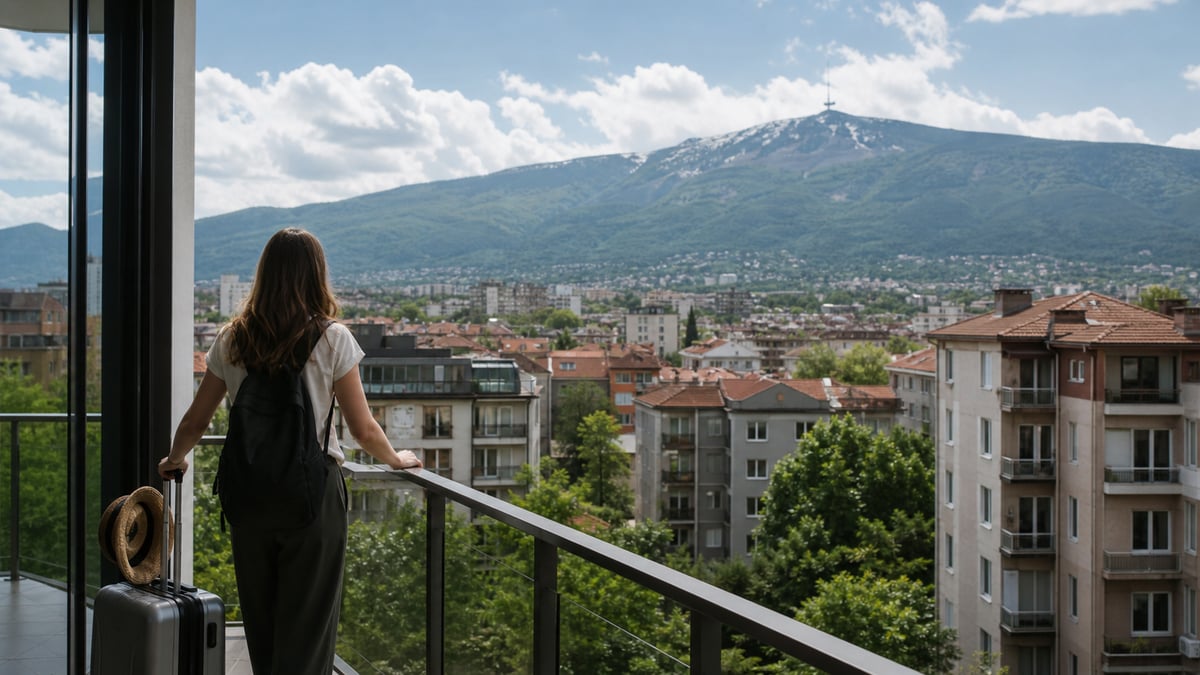
Sofia is the centre of the economy, with the technology sector, international companies and the best services and transport. It sits under Vitosha mountain, which means skiing and hiking within reach of the city - an unusual amenity for a capital.
Plovdiv is older, smaller and increasingly attractive, with a growing tech presence. Varna and Burgas on the Black Sea are pleasant and markedly seasonal. Bansko has become a well-known winter and remote-work base, cheap and mountain-focused with a substantial foreign community.
Coastal and resort property has historically been sold aggressively to foreign buyers, sometimes with poor build quality and difficult management arrangements, so due diligence matters more than usual - see buying property as a foreigner. Note also that land ownership rules can differ from building ownership for some categories of buyer.
Language and daily life
Bulgarian is a Slavic language written in Cyrillic, which is the first practical hurdle - learning the alphabet takes an afternoon and immediately makes the country navigable, so do it before you arrive. The language itself has an unusual feature for a Slavic language in having largely lost its case system, which makes it somewhat more approachable than Russian or Polish.
English is common among younger people in Sofia and in the tech sector, less so elsewhere and in administration. Russian is widely understood among older generations.
One frequently-mentioned quirk: head gestures for yes and no can be the reverse of what many visitors expect. It causes genuine confusion; ask verbally when it matters.
Socially, Bulgarians are hospitable and direct, with strong family ties and a well-developed café and rakia culture. The country is emptier than it was - emigration has been significant - which is visible in smaller towns.
Getting around
Sofia has a metro that has expanded considerably and now reaches the airport, plus trams, trolleybuses and buses on an integrated ticket, all inexpensive. Within the city you can manage without a car.
Beyond it, the picture is more mixed. The rail network is extensive on the map and slow in practice, and intercity buses are generally the faster and more reliable option between cities. The motorway network has been extended but has gaps, and secondary roads vary considerably in condition - winter driving in the mountains requires proper preparation and winter tyres are mandatory in the cold months.
Using motorways requires an electronic vignette purchased by period, and enforcement is automatic.
Sofia’s position under Vitosha mountain means skiing and hiking are genuinely accessible from the city, which is unusual for a capital and is one of the real quality-of-life arguments for living there. Bansko, the main ski resort, is a couple of hours away.
Air connections from Sofia are decent to European hubs and thinner to long-haul destinations, usually requiring a connection. If you bring a car, the licence exchange deadline in exchanging your driving licence abroad applies.
What catches people out
Assuming low tax means low friction; the administration is heavier than in western Europe. The healthcare quality gap outside Sofia. Coastal property purchases made without proper legal advice. And relocating primarily for a tax rate and discovering that everything else matters too.
For neighbours, moving to Romania is directly north with a similar flat-tax logic and a larger economy, moving to Greece is south with a warmer climate and higher costs, moving to Turkey is the large non-EU neighbour to the south-east, and across the Black Sea moving to Georgia makes a comparable low-tax pitch with a far more open entry policy.
Regional detail, permit routes and cost breakdowns are in the Bulgaria country guide and the cost of living section. For current experiences of the residence process, the general forum is where people compare notes.